


In case of defining Novel we can easily consider novel as a “fictitious prose narrative of book length, typically representing character and action with some degree of realism” but is it enough? In my opinion Novels are thoughts of an author which are colorized by the words and conveyed through text, formed on the papers.
Readers are the audiences of a masterpiece that can easily leak into your imagination and build a world by words which is not existed and those are only words. words’ implementation that forms the Novels, represents Art, Aesthetics and Elegance that is leaking through the tip of quill. here are The top 10 English Novels that are considered as the best novels ever written part 1 introduced by Salar Ahmadi.
Beloved Novel by Toni Morrison
Beloved is a novel by Toni Morrison, published in 1987. It is a powerful and haunting exploration of the legacy of slavery in America, focusing on themes of trauma, memory, and motherhood. 1st The top 10 English Novels
Summary
The story is set in the aftermath of the Civil War and follows Sethe, a former enslaved woman living in Cincinnati, Ohio. Haunted by her past, Sethe is determined to escape the memories of her traumatic experiences at Sweet Home, the plantation where she was enslaved. The narrative unfolds through a non-linear structure, revealing Sethe’s struggles with her identity and the impact of her past on her present life.
Sethe’s home is haunted by the ghost of her deceased daughter, referred to as “Beloved.” The arrival of a mysterious young woman named Beloved triggers a series of events that force Sethe to confront her painful memories and the choices she made to protect her children from the horrors of slavery.
Main Characters
- Sethe: The protagonist, whose traumatic past and fierce love for her children drive the narrative.
- Denver: Sethe’s daughter, who feels isolated and yearns for connection, representing the next generation affected by the legacy of slavery.
- Paul D: A man from Sethe’s past who comes to live with her, representing the struggle of former slaves to reclaim their identities.
- Beloved: The enigmatic figure who embodies Sethe’s past and the collective trauma of the enslaved, representing lost potential and unresolved grief.
Themes
- The Legacy of Slavery: The novel explores how the trauma of slavery affects individuals and families, emphasizing the psychological scars that persist long after emancipation.
- Motherhood and Sacrifice: Sethe’s maternal instincts drive her actions, highlighting the complexities of motherhood in the face of unimaginable circumstances.
- Memory and Trauma: The narrative delves into the nature of memory, illustrating how the past continues to haunt the present and shape identities.
Significance
Beloved is widely regarded as a masterpiece of American literature. Morrison’s lyrical prose and profound insights into the human experience have garnered critical acclaim and numerous awards, including the Pulitzer Prize for Fiction in 1988. The novel’s exploration of difficult themes, combined with its rich symbolism and complex characters, makes it a seminal work in understanding the African American experience and the enduring impact of slavery.
The Great Gatsby Novel by F. Scott Fitzgerald
The Great Gatsby is a novel by F. Scott Fitzgerald, published in 1925. It is considered one of the greatest American novels and a quintessential portrayal of the Jazz Age, exploring themes of wealth, love, and the American Dream. 2nd The top 10 English Novels
Summary
The story is narrated by Nick Carraway, a Yale graduate and World War I veteran who moves to West Egg, Long Island, in the summer of 1922. He rents a modest home next to the opulent mansion of Jay Gatsby, a mysterious and wealthy figure known for hosting extravagant parties.
As the narrative unfolds, Nick learns that Gatsby is in love with Daisy Buchanan, Nick’s cousin, who is married to the wealthy and arrogant Tom Buchanan. Gatsby’s desire to rekindle his romance with Daisy drives much of the plot. The novel explores the decadence and moral decay of the era, as well as the illusion of the American Dream.
Main Characters
- Jay Gatsby: The enigmatic protagonist known for his lavish parties and deep longing for Daisy. He represents the ideal of the American Dream but is ultimately a tragic figure.
- Nick Carraway: The narrator who provides a critical perspective on the events and characters, serving as a moral compass throughout the story.
- Daisy Buchanan: The beautiful and shallow woman whom Gatsby loves, embodying the allure and emptiness of wealth.
- Tom Buchanan: Daisy’s wealthy and aggressive husband, representing the old money elite and their moral corruption.
- Jordan Baker: A professional golfer and friend of Daisy’s, she becomes romantically involved with Nick and symbolizes the modern woman of the 1920s.
Themes
- The American Dream: The novel critiques the idea of the American Dream, illustrating how the pursuit of wealth and status can lead to disillusionment and moral decay.
- Class and Social Status: Fitzgerald explores the distinctions between old money and new money, highlighting the social hierarchies and prejudices of the time.
- Love and Relationships: The complex relationships among the characters reveal the superficiality and destructiveness of love when intertwined with wealth and ambition.
Significance
The Great Gatsby is renowned for its rich symbolism, including the green light at the end of Daisy’s dock, which represents Gatsby’s unattainable dreams. Fitzgerald’s lyrical prose and keen social observations have made the novel a staple in American literature and a critical commentary on the Jazz Age.
To Kill a Mockingbird Novel by Harper Lee
To Kill a Mockingbird is a classic novel written by Harper Lee, published in 1960. 3rd The top 10 English Novels
Summary
Set in the 1930s in the fictional town of Maycomb, Alabama, the story is narrated by Scout Finch, a young girl whose father, Atticus Finch, is a lawyer. The novel explores themes of racial injustice, moral growth, and compassion through the experiences of Scout and her brother, Jem.
Main Characters
- Scout Finch: The narrator and protagonist, a young girl who learns about the complexities of human nature.
- Atticus Finch: Scout’s father, a moral and principled lawyer who defends a Black man, Tom Robinson, accused of raping a white woman.
- Jem Finch: Scout’s older brother, who also grapples with the moral dilemmas presented in the story.
- Tom Robinson: A Black man falsely accused of raping Mayella Ewell, representing the racial injustices of the time.
- Boo Radley: A reclusive neighbor who becomes a symbol of kindness and understanding.
Themes
- Racial Injustice: The novel addresses the systemic racism in the American South and the consequences of prejudice.
- Moral Growth: Scout and Jem’s journey from innocence to a deeper understanding of human nature and morality.
- Compassion and Empathy: The importance of understanding others’ perspectives, encapsulated in Atticus’s advice to “walk in someone else’s shoes.”
Significance
The novel has received critical acclaim for its poignant exploration of social issues and has become a staple in American literature, often studied in schools for its themes and moral lessons.
One Hundred Years of Solitude Novel by Gabriel García Márquez
One Hundred Years of Solitude is a landmark novel by Colombian author Gabriel García Márquez, published in 1967. It is considered one of the most significant works of magical realism and has had a profound impact on literature. 4th The top 10 English Novels
Summary
The novel chronicles the multi-generational story of the Buendía family in the fictional town of Macondo. It blends the magical and the mundane, exploring themes of solitude, fate, and the cyclical nature of history.
Main Characters
- José Arcadio Buendía: The patriarch of the Buendía family, whose ambition and obsession with science lead to both innovation and tragedy.
- Úrsula Iguarán: José Arcadio’s wife, who is strong-willed and pragmatic, often trying to hold the family together.
- Aureliano Buendía: Their son, who becomes a revolutionary leader and struggles with his identity and legacy.
- Remedios the Beauty: A beautiful and ethereal character whose innocence and purity have profound effects on those around her.
- Fernanda del Carpio: A rigid and aristocratic woman who marries Aureliano and embodies themes of tradition versus modernity.
Themes
- Solitude: The title itself reflects the pervasive theme of isolation experienced by the characters, both physically and emotionally.
- Magical Realism: The blending of magical elements with realistic settings and events, creating a rich tapestry of narrative.
- Time and History: The cyclical nature of time is emphasized, with events repeating across generations, highlighting the inevitability of fate.
Significance
The novel is celebrated for its intricate narrative style, rich symbolism, and exploration of Latin American culture and history. It is often regarded as García Márquez’s masterpiece and has influenced countless writers and artists.
Adventures of Huckleberry Finn Novel by Mark Twain
The Adventures of Huckleberry Finn is a seminal novel by American author Mark Twain, published in 1884. It is often regarded as one of the greatest works of American literature and is noted for its vivid portrayal of life along the Mississippi River. 5th The top 10 English Novels
Summary
The novel follows the journey of a young boy, Huck Finn, as he escapes from his abusive father and embarks on an adventure down the Mississippi River. Along the way, he encounters various characters, including Jim, a runaway slave, and they form a deep bond as they navigate the challenges of society and their own moral dilemmas.
Main Characters
- Huckleberry Finn (Huck): The protagonist and narrator, Huck is adventurous, independent, and often struggles with the moral values of the society around him.
- Jim: A runaway slave who seeks freedom and becomes Huck’s close friend and companion on their journey.
- Tom Sawyer: Huck’s friend, whose romantic notions of adventure often contrast with Huck’s more pragmatic approach.
- Pap Finn: Huck’s abusive father, who represents the darker aspects of society and family.
- The Duke and the King: Con men who join Huck and Jim on their journey, providing comic relief and commentary on human greed and deception.
Themes
- Racism and Slavery: The novel addresses the issues of race and the moral complexities of slavery in pre-Civil War America.
- Freedom and Adventure: Huck’s journey symbolizes the quest for freedom, both physically and morally.
- Moral Development: Huck’s internal conflict about helping Jim escape reflects the tension between societal norms and personal ethics.
Significance
Twain’s novel is praised for its innovative use of dialect, deep character development, and social criticism. It has sparked extensive debate over its themes, particularly regarding race and morality, and remains a central text in American literature courses.
The top 10 English Novels Considered As The Best Books Ever Written part 1
what you have just read was the half of The top 10 English Novels introduction by Salar Ahmadi. you can also read other articles which are written by Salar Ahmadi links are mentioned below.
War and Peace Book by Leo Tolstoy
War and Peace is an epic novel by Russian author Leo Tolstoy, first published in 1869. It is considered one of the greatest works of world literature, blending historical fiction with philosophical reflections.6th The top 10 English Novels
Summary
Set against the backdrop of the Napoleonic Wars, the novel follows the lives of several families, primarily the Rostovs, the Bolkonskys, and the Bezukhovs, as they navigate love, loss, and the tumult of war. The narrative intertwines personal stories with historical events, exploring the impact of war on society and individuals.
Main Characters
- Pierre Bezukhov: The illegitimate son who inherits a fortune and struggles to find his place in society, seeking meaning in life.
- Prince Andrei Bolkonsky: A disillusioned aristocrat who seeks glory in war but grapples with the futility of his ambitions.
- Natasha Rostova: A young and passionate woman whose romantic entanglements and growth are central to the story.
- Countess Rostova: Natasha’s mother, representing the warmth and challenges of family life.
- General Kutuzov: A key military leader who embodies the wisdom and complexities of leadership during wartime.
Themes
- The Nature of War: The novel examines the chaos of war, its impact on individuals, and the philosophical questions it raises about fate and free will.
- Love and Family: Personal relationships are central to the narrative, highlighting the joys and sorrows of love and the importance of family bonds.
- History and Individuality: Tolstoy explores the relationship between historical events and individual lives, questioning the role of great leaders versus the collective actions of ordinary people.
Significance
War and Peace is renowned for its detailed character development, intricate plotting, and profound philosophical insights. Tolstoy’s exploration of the human condition and the moral dilemmas faced during times of conflict has made the novel a timeless classic, studied for its literary and historical significance.
Madame Bovary Novel by Gustave Flaubert
Madame Bovary is a novel by French author Gustave Flaubert, published in 1856. It is considered one of the most influential works of literary realism and explores themes of desire, dissatisfaction, and the constraints of society. 7th The top 10 English Novels
Summary
The novel follows the life of Emma Bovary, a young woman who marries Charles Bovary, a simple and unambitious country doctor. Disillusioned with her mundane life and yearning for romance and luxury, Emma embarks on a series of affairs and extravagant spending, ultimately leading to her tragic downfall.
Main Characters
- Emma Bovary: The protagonist, whose romantic ideals and desires lead her to seek fulfillment outside her marriage.
- Charles Bovary: Emma’s husband, a kind but dull man who is oblivious to Emma’s discontent and infidelities.
- Rodolphe Boulanger: A wealthy landowner who becomes Emma’s lover, representing the allure of passion and escape.
- Léon Dupuis: A young law clerk who also becomes romantically involved with Emma, embodying her search for emotional connection.
- Monsieur Rouault: Emma’s father, a local physician whose values contrast with Emma’s aspirations.
Themes
- Romanticism vs. Reality: The novel contrasts Emma’s romantic ideals with the harsh realities of her life, highlighting the dangers of unrealistic expectations.
- Boredom and Dissatisfaction: Emma’s constant quest for excitement and fulfillment reflects broader themes of existential dissatisfaction.
- Societal Constraints: Flaubert critiques the limitations placed on women in 19th-century society, exploring themes of marriage, class, and gender roles.
Significance
Madame Bovary is celebrated for its innovative narrative style, psychological depth, and meticulous attention to detail. Flaubert’s portrayal of Emma’s inner life and struggles has made the novel a cornerstone of modern literature, influencing countless authors and movements.
Great Expectations Novel by Charles Dickens
Great Expectations is a novel by Charles Dickens, first published in 1860-1861. It is one of Dickens’s most famous works and is celebrated for its rich characters, social commentary, and themes of personal growth and redemption. 8th The top 10 English Novels
Summary
The story follows the life of Pip, an orphan raised by his sister and her husband, Joe Gargery, a blacksmith. Pip’s life changes dramatically when he helps an escaped convict, Magwitch, and later becomes a gentleman through mysterious means, believing he has inherited wealth from the reclusive Miss Havisham. The novel explores Pip’s journey from childhood to adulthood, his aspirations, and the moral dilemmas he faces.
Main Characters
- Pip (Philip Pirrip): The protagonist and narrator, whose journey from humble beginnings to gentleman status drives the narrative.
- Estella: The beautiful but cold-hearted ward of Miss Havisham, who becomes Pip’s love interest and represents his aspirations and frustrations.
- Miss Havisham: A wealthy, eccentric woman who was jilted at the altar and lives in her decaying mansion, representing the theme of lost dreams.
- Joe Gargery: Pip’s kind-hearted brother-in-law, a blacksmith who embodies loyalty and humility.
- Magwitch: The convict Pip helps, whose influence on Pip’s life is profound and transformative.
Themes
- Social Class and Ambition: The novel critiques the class system of Victorian England and explores the complexities of wealth and status.
- Identity and Self-Discovery: Pip’s journey reflects his struggle with his identity, as he grapples with his origins and aspirations.
- Love and Redemption: The relationships Pip forms throughout the novel highlight the importance of love, forgiveness, and personal growth.
Significance
Great Expectations is renowned for its intricate plot, memorable characters, and exploration of universal themes. Dickens’s vivid portrayal of Victorian society and his ability to blend humor with serious social commentary have made it a timeless classic in English literature.
The Trial Novel by Franz Kafka
The Trial is a novel by Franz Kafka, published posthumously in 1925. It is one of Kafka’s most significant works and is often regarded as a classic of existential literature. The novel explores themes of bureaucracy, alienation, and the absurdity of the human condition. 9th The top 10 English Novels
Summary
The story follows Josef K., a successful banker who is unexpectedly arrested one morning without being informed of the charges against him. As he navigates a nightmarish legal system, K. becomes increasingly frustrated and bewildered by the opaque processes and the seemingly arbitrary nature of the law. His attempts to defend himself lead him deeper into a labyrinth of bureaucracy, ultimately culminating in a sense of helplessness and despair.
Main Characters
- Josef K.: The protagonist, whose struggle against an incomprehensible legal system serves as the central focus of the narrative.
- Fräulein Bürstner: A young woman who becomes involved with K. and represents a fleeting connection to normalcy and human connection.
- The Lawyer: A character who embodies the inefficiency and absurdity of the legal system, offering little help to K.
- The Inspector: A mysterious figure who informs K. of his arrest and symbolizes the authority of the law.
Themes
- The Absurdity of Bureaucracy: The novel critiques the dehumanizing nature of bureaucratic systems and the arbitrary power they wield.
- Alienation and Isolation: K.’s experiences reflect the feelings of alienation and existential dread in modern society.
- Guilt and Responsibility: The theme of guilt permeates the narrative, as K. grapples with his perceived culpability in a system that offers no clear answers.
Significance
The Trial is celebrated for its surreal and nightmarish quality, capturing the anxieties of the modern age. Kafka’s unique narrative style and exploration of existential themes have influenced countless writers and thinkers, making the novel a cornerstone of 20th-century literature.
To the Lighthouse Novel by Virginia Woolf
To the Lighthouse is a novel by Virginia Woolf, published in 1927. It is considered one of her most important works and a classic of modernist literature. The novel explores themes of time, memory, and the complexities of human relationships.10th The top 10 English Novels
Summary
The narrative is set in the Ramsay family’s summer home on the Isle of Skye in Scotland. It is divided into three parts:
- The Window: This section introduces the Ramsay family and their guests as they plan a trip to the lighthouse. The dynamics of their relationships, especially between Mr. and Mrs. Ramsay, are explored, along with the theme of unfulfilled desires.
- Time Passes: In this interlude, Woolf examines the passage of time, depicting the changes in the house and the impact of World War I. The narrative reflects on loss and the inevitability of change.
- The Lighthouse: The final section follows the remaining Ramsay family members and their friends as they finally make the long-awaited trip to the lighthouse. This journey serves as a culmination of the themes of connection and the search for meaning.
Main Characters
- Mrs. Ramsay: The nurturing matriarch who embodies warmth and creativity, struggling with her role as a wife and mother.
- Mr. Ramsay: A philosopher and the authoritative figure of the family, often preoccupied with his own intellectual pursuits.
- Lily Briscoe: A young artist who grapples with her identity and the societal expectations placed on women, representing the theme of artistic expression.
- James Ramsay: The Ramsays’ youngest son, who has a strong desire to visit the lighthouse, symbolizing innocence and longing.
Themes
- The Passage of Time: Woolf explores how time affects perception, memory, and relationships, highlighting the transient nature of life.
- Gender Roles: The novel critiques traditional gender roles, particularly through the character of Lily Briscoe, who challenges societal expectations.
- Art and Creation: The act of creation, both in art and in life, is a central theme, as characters seek to find meaning and connection in their experiences.
Significance
To the Lighthouse is celebrated for its innovative narrative style, stream-of-consciousness technique, and deep psychological insight. Woolf’s exploration of complex themes and her lyrical prose have made the novel a landmark in modernist literature, influencing generations of writers and thinkers.
Our Mutual Friend Novel by Charles Dickens
Our Mutual Friend is a novel by Charles Dickens, published in 1864-1865. It is Dickens’s last completed novel and is notable for its intricate plot, rich characterizations, and exploration of themes related to wealth, identity, and social change.
Summary
The story revolves around the inheritance of a fortune left by the deceased Mr. Harmon, a wealthy dust contractor. The novel opens with the mysterious circumstances surrounding his death and the subsequent contest for his fortune. The primary characters include:
- John Harmon: The heir to the fortune who returns from America disguised as a common man after his father’s death.
- Bella Wilfer: A young woman who initially values wealth but learns about love and self-worth throughout the story.
- Rodney “Rogue” Riderhood: A morally ambiguous character who embodies the darker aspects of society.
- Mr. and Mrs. Boffin: The kind-hearted couple who come into wealth and attempt to navigate their newfound status while helping others.
As the narrative unfolds, various subplots interweave, revealing the lives of the characters connected to the river Thames, including the impoverished and the wealthy, and highlighting the contrasts between different social classes.
Main Characters
- John Harmon: The protagonist who struggles with his identity and the implications of wealth.
- Bella Wilfer: A central character who evolves from a materialistic perspective to a more profound understanding of love and happiness.
- Mr. Boffin: A generous and kind-hearted man who represents the potential for goodness in wealth.
- Lizzie Hexam: The daughter of a grave digger, who becomes a moral compass in the story, emphasizing themes of integrity and compassion.
- Julius Handford: A character involved in the pursuit of wealth, representing the greed and ambition prevalent in society.
Themes
- Wealth and Morality: The novel explores the effects of wealth on human relationships, morality, and social status.
- Identity and Transformation: Characters often grapple with their identities, reflecting the changing social landscape of Victorian England.
- Social Class and Change: Dickens critiques the rigid class structure and highlights the fluidity of social status, especially in the context of industrialization.
Significance
Our Mutual Friend is praised for its complex narrative structure, vivid characterizations, and social commentary. Dickens’s ability to weave multiple storylines and explore profound themes makes this novel a significant contribution to English literature. The work reflects his concerns about the effects of industrialization and the moral implications of wealth, making it relevant to contemporary discussions about society and class.
I hope you have enjoyed reading this article about The top 10 English Novels. be alert for more related contexts. thanks for your time. The top 10 English Novels
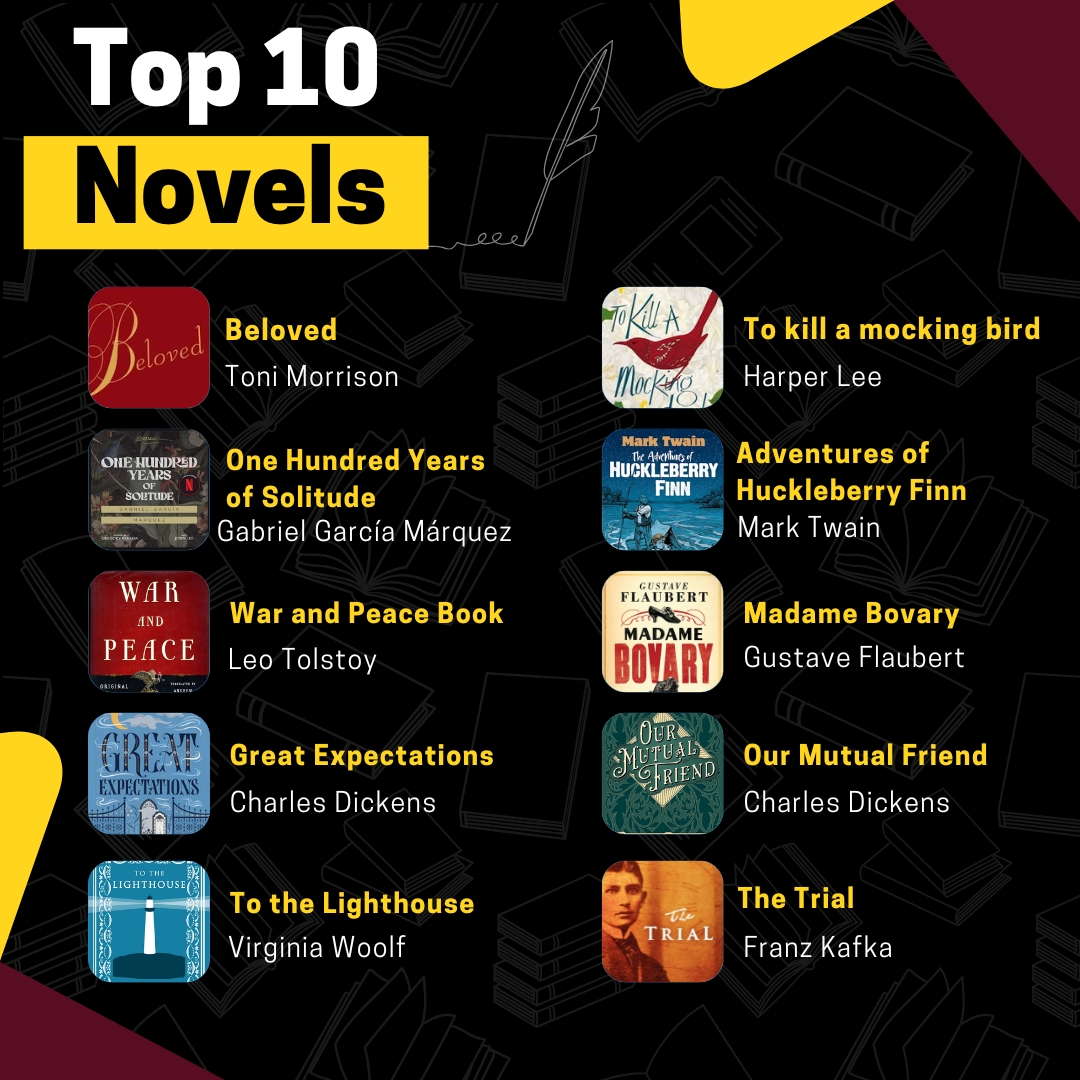
The top 10 English Novels based on google books
